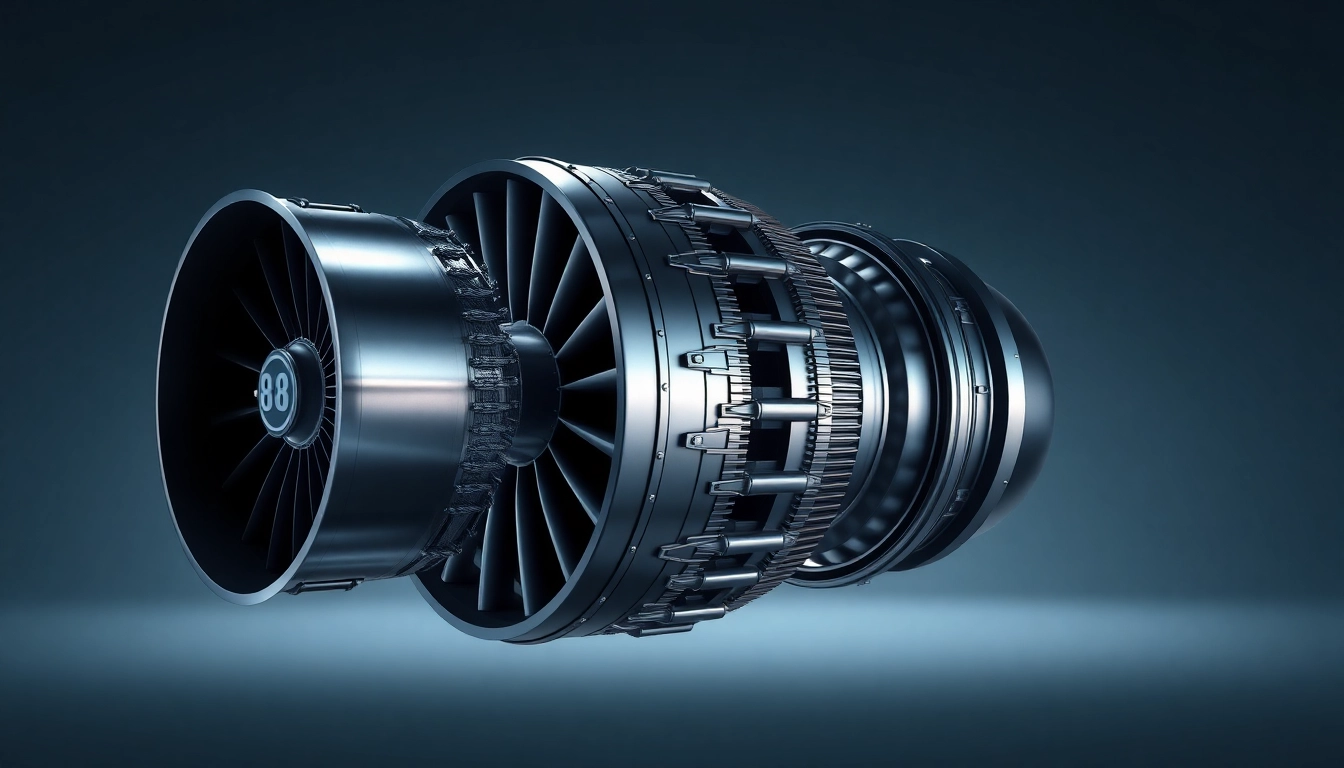
The Evolution of Turbofan Engines: A Focus on NK 88
As the aviation industry strives for enhanced performance and reduced environmental impact, turbofan engines have emerged as a cornerstone of modern aircraft design. At the forefront of this evolution is the NK 88, an innovative turbofan engine developed by Kuznetsov Design Bureau. This article delves into the historical context, key design features, and performance metrics of the NK 88, shedding light on its role in shaping the future of aviation.
1.1 Historical Background of Turbofan Technology
The origin of turbofan engines can be traced back to the mid-20th century when engineers sought ways to improve efficiency and thrust in jet propulsion. Initially, turbojet engines dominated the skies, but their high fuel consumption and noise levels led to the development of turbofan engines, which combine the core principles of turbojets with a bypass system. This evolution paved the way for engines like the NK 88, which exemplify the cutting-edge of aerospace technology.
1.2 Key Design Features of the NK 88
The NK 88 is distinguished by its advanced design features that enhance performance and efficiency. Notably, its high bypass ratio not only maximizes thrust but also significantly lowers noise levels, making it suitable for urban operations. Additionally, the engine’s lightweight materials and innovative cooling technologies contribute to improved fuel efficiency, addressing one of the industry’s primary challenges. Such characteristics make NK 88 a pivotal development in modern aviation.
1.3 Comparative Analysis with Other Turbofan Engines
When compared to its counterparts, the NK 88 stands out for its unique combination of power and efficiency. Engines like the Pratt & Whitney PW1000G and CFM International LEAP have set benchmarks in their respective categories, yet the NK 88’s targeted design for specific applications grants it advantages in military and commercial sectors alike. A comprehensive analysis reveals that while other engines may excel in particular metrics, the NK 88 offers a compelling blend of performance, cost-efficiency, and environmental consideration.
Performance Metrics and Specifications of the NK 88
Understanding the performance specifications of the NK 88 is crucial for evaluating its operational potential in a competitive marketplace.
2.1 Understanding Thrust and Fuel Efficiency
The thrust produced by the NK 88 is one of its standout features, providing power that meets the demands of both military and commercial aircraft. Additionally, its fuel efficiency is enhanced by state-of-the-art engineering practices, ensuring optimal performance while minimizing operational costs. The continuous drive for innovation positions the NK 88 as a frontrunner among modern turbofans.
2.2 Innovations in Engine Materials and Technologies
The advancement of materials science has enabled the development of lighter and more durable components in the NK 88, enhancing both performance and longevity. Innovations such as ceramic matrix composites and advanced alloys contribute to the engine’s ability to withstand extreme conditions while maintaining efficiency, a significant leap forward in turbofan technology.
2.3 Environmental Impact and Emission Standards
As global aviation faces increasing scrutiny regarding environmental impact, the NK 88 aims to reduce emissions through its design and operational efficiencies. By meeting stringent emission standards, the engine not only complies with regulatory requirements but also contributes to the aviation industry’s broader sustainability goals.
Applications of the NK 88 in Modern Aviation
The versatility of the NK 88 allows it to be integrated into a variety of aircraft, serving vital roles across multiple aviation sectors.
3.1 Role in Military Aviation and Defense Systems
In military applications, the NK 88 offers the thrust needed for advanced fighter jets and transport aircraft, showcasing its adaptability to challenging environments. The engine’s superior performance characteristics ensure that military forces can achieve operational superiority while maintaining agility and efficiency during missions.
3.2 Integration in Commercial Aircraft
Commercial aviation also benefits from the NK 88’s implementation, as airlines seek to enhance their fleet’s performance while reducing fuel costs. The engine’s reliability and efficiency make it an attractive option for new aircraft designs, aligning with the industry’s move toward greener aviation solutions.
3.3 Future Trends and Predictions for Turbojet Usage
As technology evolves, the NK 88 is set to play a crucial role in the future of aviation. Developments in hybrid propulsion, supersonic travel, and unmanned aerial systems will leverage the engine’s capabilities, pushing the boundaries of what is possible in aeronautics.
Challenges Facing the NK 88 Development
Despite its advancements, the journey of the NK 88 is not without challenges. Understanding these obstacles is essential for stakeholders in the aviation industry.
4.1 Technical Hurdles in Engineering
The intricacies of modern engine design present numerous technical challenges, from ensuring optimal integration of new materials to enhancing reliability over extended service periods. The NK 88 must navigate these obstacles to achieve its full potential and maintain competitiveness in the market.
4.2 Funding and Investment in Aerospace Technology
Securing funding for research and development is a critical challenge that can hinder innovation. The aerospace industry’s reliance on substantial capital investment necessitates strategic partnerships and government support to drive forward projects like the NK 88.
4.3 Market Competition and Strategic Partnerships
In a highly competitive market, the NK 88 faces challenges in distinguishing itself among established turbofan engines. Strategic partnerships and effective marketing are essential for capturing market share and positioning the NK 88 as a leader in turbofan engine technology.
Future Directions for Turbofan Engine Innovations Post-2025
The future of turbofan engine technology is bright, with numerous innovations on the horizon that promise to redefine aviation.
5.1 Emerging Technologies in Aeronautics
Advancements in artificial intelligence, digital twin simulations, and predictive maintenance practices are set to revolutionize engine design and operation. The integration of such technologies will enhance the performance and lifecycle of engines like the NK 88.
5.2 Predictions for the Next Generation of Turbofans
Experts predict that the next generation of turbofan engines will prioritize sustainability and energy efficiency. Innovations such as hybrid-electric systems and sustainable aviation fuels will become increasingly prominent, with the NK 88 positioned at the forefront of this transition.
5.3 Strategic Insights from Industry Experts
Industry experts emphasize the importance of collaboration between manufacturers, regulators, and research institutions to drive forward the development of next-gen turbofans. By fostering innovation through shared knowledge and resources, the NK 88 can adapt to meet the future demands of the aviation industry.
As we move towards a new era in aviation, embracing the advancements brought forth by the NK 88 and its peers will be critical. The commitment to innovation and sustainable practices will define the future of air travel and its environmental footprint, paving the way for a more efficient and greener industry. For those exploring new frontiers in aviation finance, the insights around Rút Tiền NK88 may provide valuable guidance.